
Herb Library
Ashwagandha
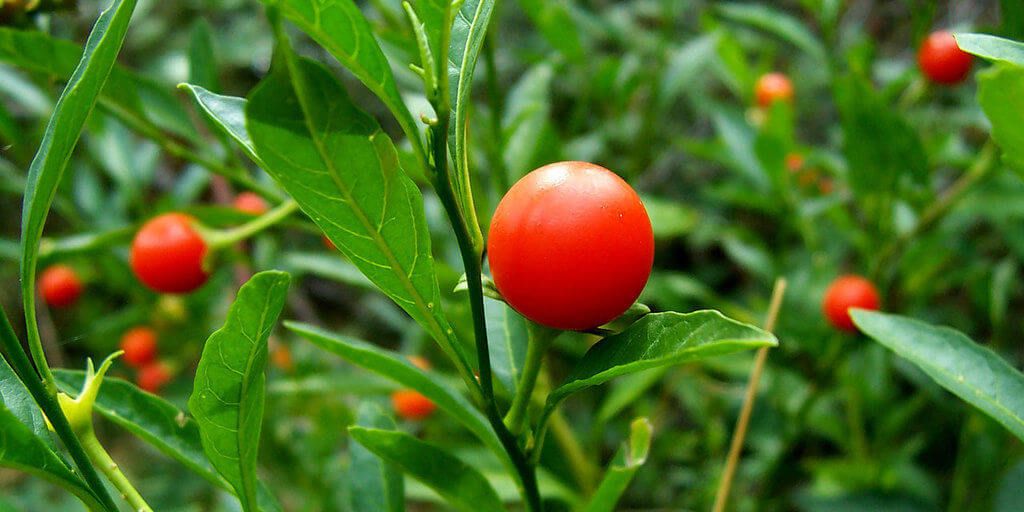
Ashwagandha (Withania somnifera), also known as Winter Cherry, is an Ancient herb. It is the ‘ginseng’ of Ayurvedic medicine, the traditional medicine of India, and is considered an ‘adaptogen’, a term used to describe herbs that improve physical energy and athletic ability, increase immunity to colds and infections and increase sexual capacity and fertility.
The root is the part of the plant used for medicinal purposes.
Ashwagandha Health Benefits
Below we will explore some of the health benefits of Ashwagandha in more detail:
Ashwagandha Strengthens Immunity
One reason for the reputation of ashwagandha as a general energy-promoting, disease-preventing tonic may be its effect on the immune system. A number of studies have shown significant increases in white blood cell counts and other measures of strengthened immunity in rodents given ashwagandha or certain chemicals extracted from the herb.
Sedative Effect of Ashwagandha
Ashwagandha may also have a mild sedative effect on the central nervous system and in animal studies it has been shown to be a muscle relaxant.
Ashwagandha Increases Vitality
If your vitality feels drained and your body is slow to bounce back, Ashwagandha may be just what your system needs to reset and recharge. Ashwagandha is often referred to as a rejuvenating herb in traditional Ayurvedic medicine and for good reason. It’s widely used to restore energy, build resilience and support overall vitality, especially after periods of chronic illness, stress or fatigue.
Ashwagandha is commonly used to increase vitality, particularly when recovering from chronic illnesses, and for pain management for arthritic conditions.
This adaptogenic root helps the body recover from physical depletion by supporting adrenal function and reducing excessive cortisol levels. By calming the stress response, Ashwagandha frees up the body’s energy for healing and repair.
Ashwagandha has also been shown to support strength and endurance, making it valuable for those with chronic fatigue, post-viral exhaustion or those recovering from long-term stress. In traditional use, it’s combined with nourishing herbs or foods like warm milk to rebuild strength in weak or depleted individuals.
Ashwagandha for Joint Pain and Arthritis
Additionally, Ashwagandha may help ease joint pain and inflammation in arthritic conditions. Its mild analgesic and anti-inflammatory actions have made it a go-to for those managing rheumatoid or osteoarthritis, not only to reduce discomfort but to increase mobility and quality of life.
Ashwagandha Regulates Blood Sugar
Ashwagandha may also help regulate blood sugar, which aids in suppressing sugar cravings.
Emerging research supports Ashwagandha’s ability to help regulate blood sugar levels, which is particularly helpful for people with insulin resistance or blood sugar fluctuations that lead to energy crashes and cravings.
Ashwagandha may increase insulin sensitivity and reduce fasting blood glucose levels, making it a useful ally for metabolic health. This is thought to occur through both improved pancreatic function and reduced stress hormone levels (since elevated cortisol can spike blood sugar).
By stabilising blood glucose, Ashwagandha helps curb sugar cravings, support more balanced energy throughout the day and reduce the mood swings or fatigue that often follow a sugar crash.
If you’re working on balancing your diet or reducing your reliance on sugar for quick energy, Ashwagandha offers a gentle, root-level approach to regulating your internal rhythms.
Ashwagandha and Cancer Research
Ashwagandha has attracted scientific interest for its potential role in cancer research. Laboratory studies have investigated compounds such as withaferin A and their effects on cancer cells, including possible effects on cell growth and survival. These findings are promising areas for further investigation, although clinical research has not yet established ashwagandha as a treatment or preventive measure for cancer in humans.
Ashwagandha has also been studied for its potential effects on thyroid function. Some small human studies have reported changes in thyroid hormone levels, although further research is needed to understand its benefits and safety. People with thyroid conditions or taking thyroid medication should seek professional advice before using ashwagandha supplements.
Ashwagandha for Male Fertility
Ashwagandha has a long history of traditional use in southern Asia as a tonic for male vitality, libido and reproductive health. Modern research has explored its potential effects on testosterone, sperm quality, stress and sexual wellbeing. Some small studies have reported encouraging results, particularly in certain measures of male reproductive health, although larger clinical trials are needed to confirm these findings.
Research on ashwagandha has concluded that extracts of the plant has a direct spermatogenic influence on the seminiferous tubules of immature rats presumably by exerting a testosterone-like effect (1). It is also a potential source of hypoglycemic, diuretic and hypocholesterolemic agents (2).
Ashwagandha Reduces Stress
Ashwagandha is widely valued in traditional herbal medicine as an adaptogenic herb, used to support the body’s response to physical and emotional stress.
Modern clinical research has investigated its potential benefits for stress, anxiety and sleep. Several small studies have reported improvements in perceived stress, sleep quality and related measures among adults taking ashwagandha extracts. These findings support continued interest in its use for stress management, although the strength of the evidence varies between preparations and further long-term studies are needed.
Ashwagandha is generally well tolerated by many adults in short-term studies, but it can cause side effects such as digestive discomfort and drowsiness. Rare cases of liver injury have been reported. It may also interact with certain medicines and affect thyroid function. Ashwagandha is generally not recommended during pregnancy or breastfeeding, and people with relevant medical conditions should seek professional advice before taking supplements.
Antioxidant Properties of Ashwagandha
Because Ashwagandha has traditionally been used to treat various diseases associated with nerve tissue damage related to the destructive molecules known as free radicals, some researchers have speculated that the herb may have antioxidant properties. Free-radical damage plays a role in normal ageing and in such neurological conditions as epilepsy, Parkinson’s disease and Alzheimer’s disease.
| Need a clear starting point? Explore your gut health with our free Gut Health Quiz at The Nature of Vitality. Get personalised guidance on your next steps. |
Always take care when taking herbs and Read Our Disclaimer.
Ashwagandha (Winter Cherry) Herb Notes / Side Effects
Ashwagandha root may increase the effects of barbiturates; its use in combination with sedatives should be avoided. As a central nervous system depressant or tranquilizer, the herb should be used sparingly.
Ashwagandha is generally safe at the doses recommended on the package. At high doses it may have steroid activity similar to creatine.
Latin Names
Withania somnifera, Physalis flexuosa
Common Names
Ashwagandha, Winter Cherry, Ashgandh, Achuvagandi, Amikkira-gadday, Amkulang-kalang, Amukkira-kilzhangu, Amukran-kizhangu, Asagandha, Asana, Asgandh, Asundha, Asvagandhi, Fatarfoda, Hirimaddina-gadday, Hirre-gadday, Penneroo-gadda, Pevette, Sogade-beru
Properties of Ashwagandha
Strengthens immune system, antioxidant, rejuventaing. abortifacient, adaptogen, antibiotic, aphrodisiac, astringent, anti-inflammatory, antioxidant, anti-anxiety, anti-tumor, immuno-modulating, diuretic; narcotic, sedative, tonic.
Ashwagandha uses
Increase immunity to colds & infections, vitality, male fertility and libido. Combats impotence and helps regulate blood sugar.
Ashwagandha is indicated for:
Insomnia, slows tumor growth, anxiety, reduces cholesterol.
References
_1. J ETHNOPHARMACOL 2001 APR;75(1):1-4 – THE EFFECT OF AQUEOUS EXTRACTS OF CYNOMORIUM COCCINEUM AND WITHANIA SOMNIFERA ON TESTICULAR DEVELOPMENT IN IMMATURE WISTAR RATS. – ABDEL-MAGIED EM, ABDEL-RAHMAN HA, HARRAZ FM. 2. INDIAN J EXP BIOL 2000 JUN;38(6):607-9 — HYPOGLYCEMIC, DIURETIC AND HYPOCHOLESTEROLEMIC EFFECT OF WINTER CHERRY (WITHANIA SOMNIFERA, DUNAL) ROOT. — ANDALLU B, RADHIKA B. — DEPARTMENT OF HOME SCIENCE, SRI SATYA SAI INSTITUTE OF HIGHER LEARNING, ANANTAPUR 515001, INDIA.
Keep Exploring…
Curious what other natural remedies can do? Explore the full A–Z of our Natural Healing articles.